
The 2025 Take
AI will write complex code for big apps.

In 2025, the conversation was about what AI could do. In 2026, the conversation is about what AI is doing to make your daily work easier.
We’ve moved past the “existential crisis” phase of AI for grassroots advocacy and entered the era of utility. For Digital Directors and Communications teams, the hype has settled. What’s left are the tools that actually save you time, fix your messy spreadsheets, and help you move policy.
Last year, we predicted AI would revolutionize workflows. We were right, but the reality is less about robots writing perfect sonnets and more about fixing the data headaches that keep you working late.
Here are the 5 practical ways AI is shaping advocacy strategies in 2026, backed by real data and insights from practitioners who are using these tools right now.
We are seeing a massive shift toward custom, internal tools created by non-technical staff. You don’t need a computer science degree to solve a data problem anymore. You just need to be the person on the team tired of doing manual data entry.
This is the rise of the “accidental techie”—that person on your team (maybe you) who figures out how to automate the boring stuff using AI assistants.
AdvocacyAI CEO Tom Spencer explains how non-technical staff are building their own solutions.
Excel Formula Fixers: Stop manually combining “First Name” and “Last Name” columns . Ask ChatGPT or Claude to help you: “Write an Excel formula to separate these full names into two columns.”
Browser or Excel Scripts: One step further: Use AI to write a simple script that fixes annoying formatting issues on the websites or spreadsheets you use daily. You can automate an export to Google Sheets, format it for import to another tool, and have it run daily. No Zapier required.
Data Formatting: Need to upload a list to Salesforce but the state abbreviations are wrong? Ask AI to “Format this list of states to 2-letter abbreviations” in seconds.
In 2025, “personalization” felt like a heavy lift. It meant manually tagging thousands of supporters or writing ten different versions of an email. In 2026, AI handles that sorting for you.
Here is the AI connection: You don’t need to manually read 50,000 constituent records to know who cares about “education” vs. “healthcare.” AI pattern recognition can scan your list, look at past actions, and instantly tag supporters for you. It’s not magic; it’s just a very fast filing system.
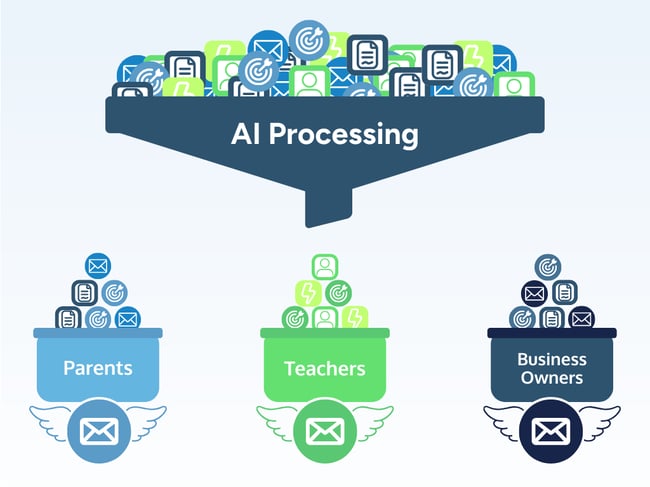
Let AI Sort Your List: Use tools that automatically tag supporters based on the links they click. If they clicked the “Climate” link in your last newsletter, the AI ensures their next email header features solar panels, not generic buildings.
Context Over Name-Dropping: Don’t just use their first name. Use the data to change the context of the ask. AI allows you to serve a different landing page image to a “Donor” vs. a “Volunteer” without building two separate pages.
The most exciting use case for advocacy AI tools in 2026 isn’t creative writing — it’s fraud detection and data hygiene.
We are seeing AI replace the friction points that annoy your real supporters. For example, CAPTCHA. AI tools are now capable of differentiating humans from bots on the backend by analyzing behavior patterns, allowing you to remove those friction-heavy boxes entirely.
Sentiment Analysis: Flag toxic comments on pages or forums so your staff doesn’t have to read them.
Deduplication: Merge duplicate records from different sources automatically.
List Cleaning: Identify and suppress inactive emails to protect your deliverability.
Search behavior is changing. People aren’t just Googling “nonprofits that save animals”; they are asking LLMs like ChatGPT or Perplexity to “List 5 nonprofits in my area that help animals.”
If your site isn’t optimized for these models, you are invisible.
Here is the hottest take for 2026: The more we use AI, the more valuable human connection becomes.
Form emails are dying. Lawmakers ignore them. But personal stories move mountains. AI can transcribe and summarize 500 video testimonials in minutes, helping you find the perfect story to share with a committee chair.
Hand-Signed Letters: Use digital tools to collect signatures, but deliver physical, hand-addressed mail to legislative offices.
Video Stories: Ask supporters to record raw, unscripted videos. Authenticity beats high production value.
In-Person Events: Use AI to organize the logistics, but focus your energy on the actual meetup.
.png?width=1400&height=800&name=Campaign%20Hub%20Announcment(1).png)
%20(3).png?width=1200&height=628&name=2026%20Grassroots%20Advocacy%20Effectiveness%20Benchmark%20Report%20(1200%20x%20628%20px)%20(3).png)