Skip to content

Advocacy in 2026: What Changed in 2025 (and What Teams Are Doing Next)

AdvocacyAI |
This blog breaks down the biggest advocacy shifts of 2025—from regulatory changes to email deliverability—and what they mean for your work in 2026.

Advocacy organizations had a busy year. In 2025, teams adapted to new realities in how they reach decision-makers, maintain supporter engagement between legislative moments, and build trust in increasingly filtered communication channels.

This recap is for people working in grassroots advocacy, government relations, and public affairs; especially teams that rely on digital outreach, supporter lists, or public comment campaigns. Below, we cover what shifted in 2025, what patterns are likely to continue into 2026, and practical adjustments advocacy teams are already making.

Table of Contents


Shift #1: A Major Change to Public Comment Access

In August, the General Services Administration (GSA) ended public access to the Regulations.gov post API. The API was how hundreds of thousands of commenters each year found dockets and submitted comments to federal agencies.

Before the shutdown of the API, organizations relied on it to surface regulatory actions, collect comments, and contribute expert input. In 2025, losing the API meant redesigning how they capture and deliver comments.

Advocacy teams shifted to:

  • Sending comments by email directly to agency staff
  • Accepting hand‑signed letters mailed to official dockets

Advocacy tech platforms came up with a workaround that bypasses native agency submission portals' CAPTCHA requirements, but orgs should keep an eye out. These workarounds require close monitoring and risk rejection or blacklisting if agencies treat them as atypical submissions.

What this means for 2026:
Expect advocates, vendors, and lawmakers to push for interoperable ways to submit comments that do not depend on a single API. Some organizations are tracking offline submissions as data

Shift #2: The Longest Federal Shutdown and How Advocates Responded

On November 12, Congress passed a budget agreement ending the longest government shutdown in U.S. history. Periods of federal disruption consistently lead advocacy teams to redirect energy toward storytelling, data readiness, and public-facing education.

With direct lawmaker access limited, media became the channel of choice. Organizations shifted gears: collecting stories, refining supporter data, and launching educational efforts while the government stayed closed.

Screenshot 2025-12-18 140301

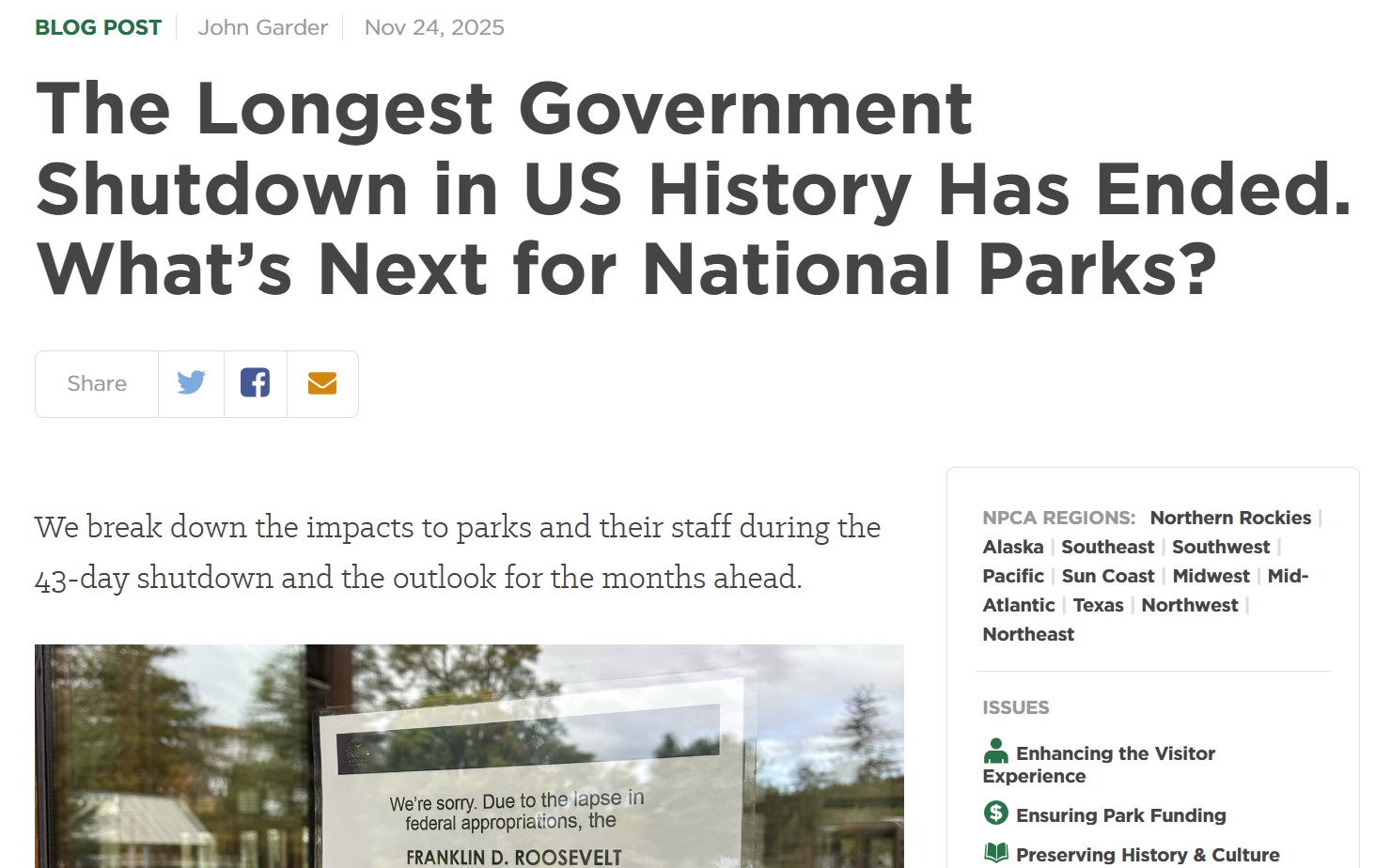
The National Parks Conservation Association took the moment to explain the real-world impact. Their shutdown report showcased the strain on park staff and operations—with photos and stories from the field. 
Screenshot 2025-12-18 135940-1

America’s Credit Unions turned their member services into engagement moments, providing guides and digital assets that helped empower their members to take action and get involved more meaningfully in advocacy longterm.


Shift #3: Email Sending Became a Compliance Issue

Organizations bulk-sending “Action Alerts” to massive, unengaged lists used to be common practice. Definitely not anymore. 

In 2025, major inbox providers implemented clearer expectations for high-volume senders. Microsoft introduced new sender requirements, following earlier guideline updates from Google and Yahoo.

At the same time, engagement benchmarks showed changing performance patterns. VoterVoice’s 2025 Advocacy Benchmark Report noted that open rates in early 2025 were lower than in recent years.

To stay visible in inboxes in 2026:

1. Maintain bounce rates below 0.1%

Routine list cleaning—quarterly for many teams—supports sender reputation and campaign reach.

2. Send with consistency, not urgency

Maintaining a steady cadence helps inbox providers recognize sender legitimacy and improves performance during high-priority moments.

3. Suppress disengaged users after 90 days

If they aren’t opening, don’t include them. Run separate, low-volume re-engagement campaigns just for them.

4. Email authentication as standard setup

SPF, DKIM, and DMARC configurations now directly influence deliverability outcomes.


Shift #4: Corporate advocacy went mainstream

In 2025, advocacy increasingly became a tool for businesses seeking to align public positions with operational values.

Survey data from Sprout Social shows that many consumers report a higher likelihood of supporting companies that engage publicly on issues. This has contributed to more partnerships between nonprofits and corporate entities, combining advocacy expertise with broader reach and resources.

What this trend brings into 2026:

  • For nonprofits, this brings opportunities for expanded reach and access to corporate financial resources. 
  • For companies, this means finding the right match with nonprofits that align with your brand, message, and policy goals. 
Screenshot 2025-12-18 142530
2 Healthcare brands formed coalitions to promote vaccine safety and sponsored advocacy summits. 
Screenshot 2025-12-18 140824
1  A business-backed climate coalition called for fossil fuel phase-outs ahead of COP30.


Shift #5: Form Emails Are (Still) Dying

It’s been 10 years since the Congressional Management Foundation shared a tough truth on constituent engagement: fewer than 5% of congressional staff think form emails influence their bosses. That reality hasn’t changed. But what has changed is how risky they’ve become.

In 2025, we saw the cost of lazy automation. A fossil fuel company in North Carolina ran what looked like a grassroots campaign—until it was outed as fake. In Idaho, a lawmaker received a "constituent" email that listed himself as the sender. When lawmakers are exposed to grassroots fraud, grassroots campaigns can lose credibility.

This year, Wyoming lawmakers formed a subcommittee to deal with inbox overload and address the concerns of an advocacy org whose emails were going to spam. Lawmakers claimed that low-value messages were burying real constituent needs. Most Wyoming legislators have no staff. They read emails themselves. If it looks automated, it’s going to spam.

Now add AI to the mix. Lawmakers and staffers are even more skeptical that the voices reaching them are real. 

Jen Daulby, CEO of the Congressional Management Foundation, put it plainly: “This is not the time for robocalls or mass email campaigns that policymakers can easily dismiss.” She urged advocacy programs to put real people and real experiences front and center—like doctors explaining how policy changes affect patient care or federal employees sharing how diplomacy impacts local economies.

“This is not the time for robocalls or mass email campaigns that policymakers can easily dismiss.”

- Jen Daulby, Congressional Management Foundation


A personal note heading into 2026

As 2025 comes to a close, we’re energized by the creativity and adaptability we’ve seen across advocacy programs nationwide. Teams adjusted quickly, prioritized ethical practices, and developed new ways to keep supporters meaningfully involved.

From the Founders (Bree and Tom)

We started AdvocacyAI as practitioners seeing gaps in advocacy tools and tactics. This year we:

  • Traveled 46,190 miles to meet partners (Bree lives in Japan)
  • Attended 9 conferences
  • Hosted 5 webinars
  • Launched a blog and resource hub for advocacy practices

Some highlights: 

PAC_booth

Our first conference booth at the Public Affairs Advocacy Conference

Kickoff
The AdvocacyAI 2025 kickoff with over 100+ partners
Tomspeaking_AI
Our CEO, Tom Spencer speaking at the Cool AI Sh*t Summit in DC
BuzzSummit
Our Co-founder and COO Bree at the Buzz Advocacy Summit
AIsummit_1_NTC
Using AI and advocacy for effective programs at the Nonprofit Technology Conference 


Our favorite part remains connecting with advocates working every day to impact policy.

The Organizations: Campaigns That Stood Out in 2025

The clearest way to see what advocacy looks like heading into 2026 is to look at what organizations actually did this year. These are a few campaigns that stayed with us and show how teams are combining digital tools, storytelling, and supporter energy.

Surfrider Foundation

In the last few weeks, Surfrider has sent more than 5,000 hand-signed letters to the administration in response to offshore drilling rules. Their supporters messages are physically delivered to the Bureau of Ocean Management, which are making the the volume and personal stories hard to ignore. See their campaign.

Mesabi Metallics 

Mesabi Metallics formed a coalition with  more than 400 Building Trades members to build support for a Minnesota project tied to green steel production. They mailed customers a QR code that led directly to an Advocacy Hub, where people could learn about the project and contact decision-makers. Governor Walz highlighted the project as a positive example for the state’s economic future.

Opportunity DC and the District of Columbia Building Industry Association

Opportunity DC and DCBIA supported one of the most significant housing reforms in DC in recent years, focused on tenant protections and eviction procedures. Their coalition used targeted outreach to individual city council members to help them understand the stakes of the bill.

Stand Up America

Stand Up America helped block gerrymandered redistricting plans in Indiana, Kansas, and Maryland by pairing on-the-ground organizing with digital outreach. Executive Director Christina Harvey described the Indiana Senate’s rejection of the plan as “an important victory for democracy,” and the campaign showed how steady constituent contact can influence state-level decisions.

The product: what we shipped in 2025

14
Key new features and products
310+
Code Deployments
35%
New Customers referred by existing users


In 2025, AdvocacyAI moved from “just” action tools into more of a full workflow for supporter engagement, nurturing, and advocacy campaigns.

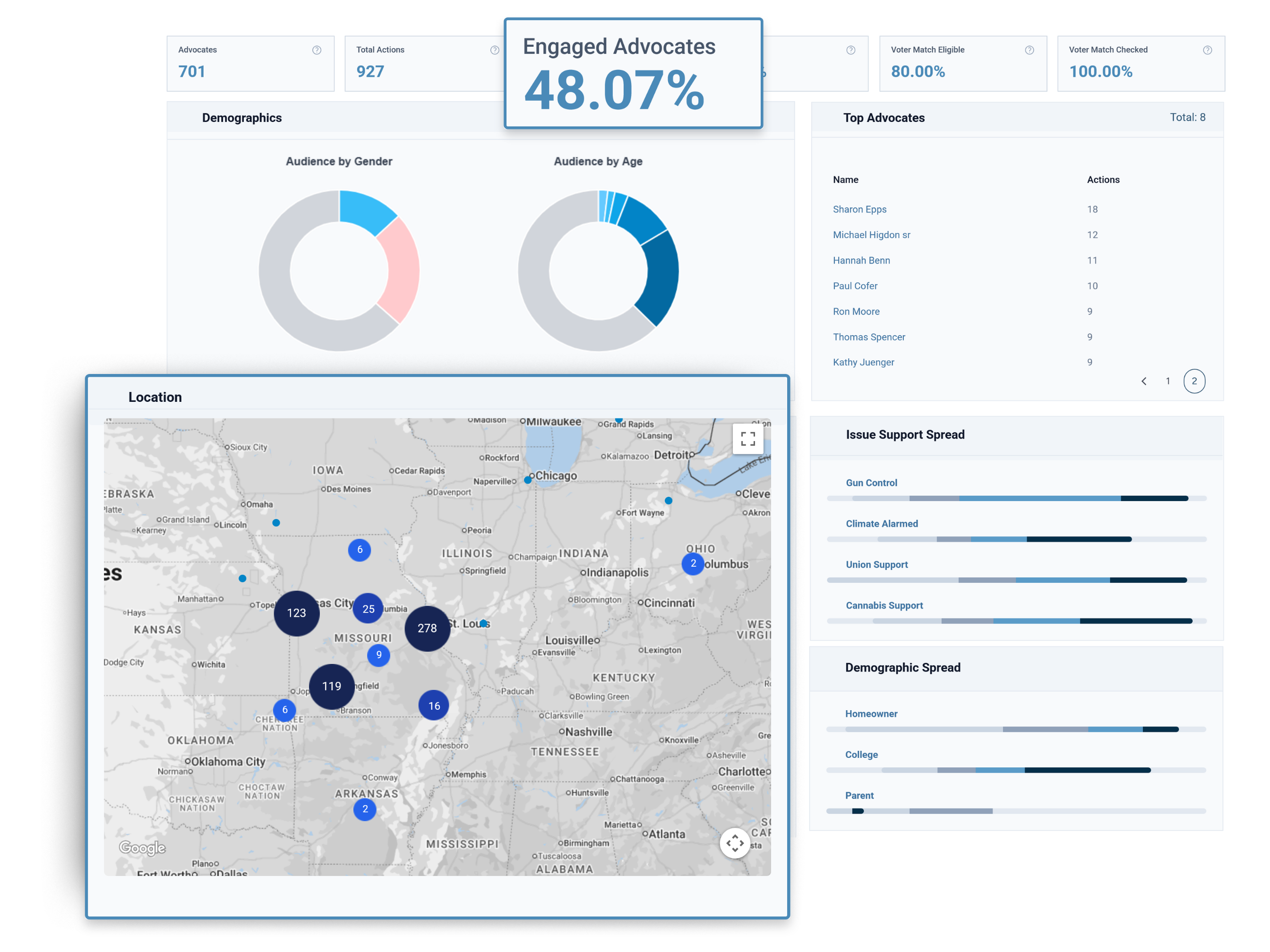
We shipped roughly 14 features and product updates, pushed about 310 code updates, and saw around 35% of new customers come from referrals by existing users. For many teams, the platform is now where actions, lists, and reporting live together instead of being scattered across tools.

Feature Home_Ad Integrations (Meta instant form)

Meta Instant Form Actions

Supporters can take action from Facebook and Instagram without extra friction

Feature Home_Put Faces to Your Advocacy Initiatives (Video testimonials, attributed and sorted)

Video Stories

Supporters can record and submit stories, not just type them
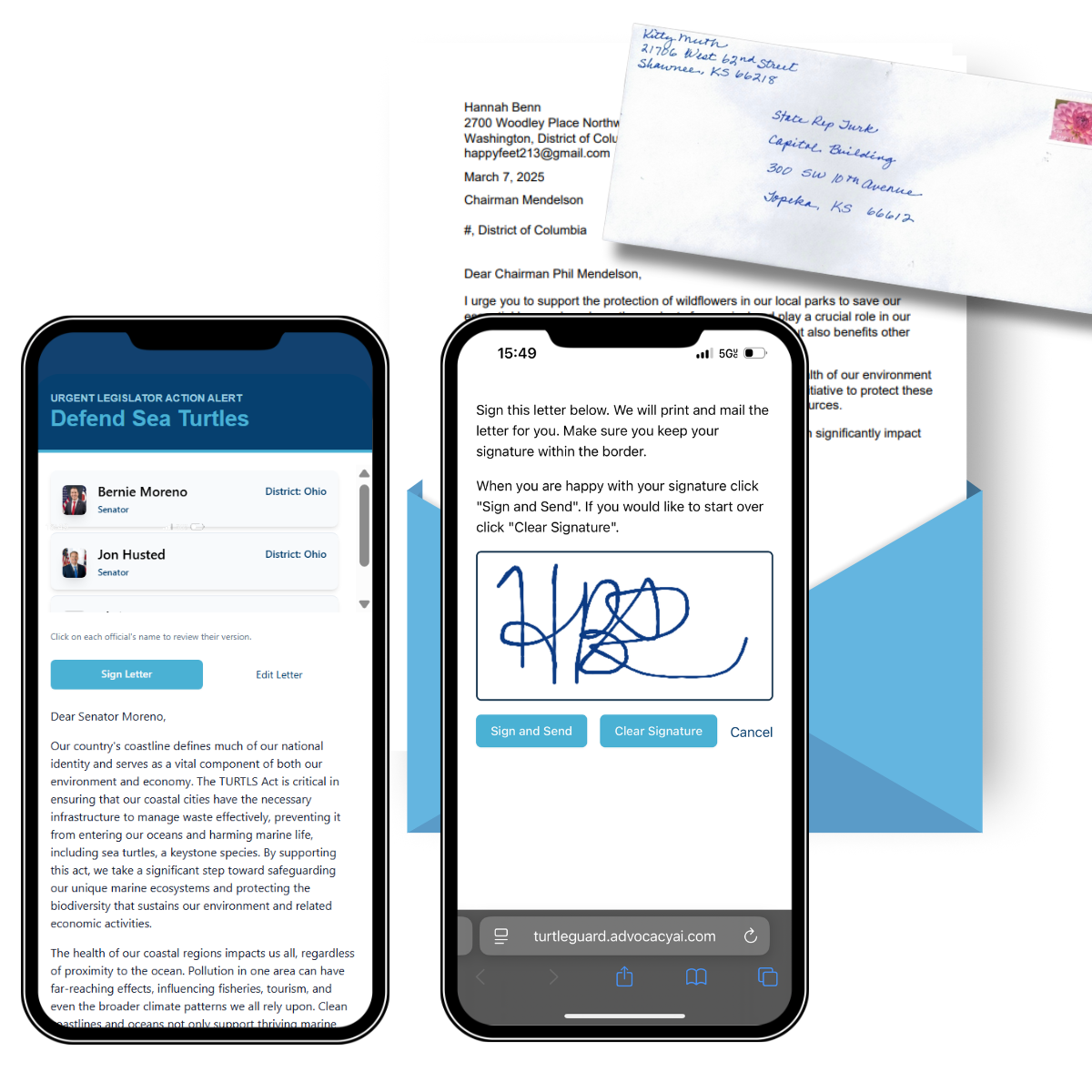
Letters

Hand-Signed Letters

Campaigns can collect physical letters while still tracking data digitally

Proudct Images for Blog Post(1)

New Integrations

Deeper connections with Salesforce, NGP VAN, Mailchimp, and other systems teams already rely on


Looking ahead, we’re focused on features that remove manual work: more automation around journeys, clearer insight into which lawmakers are engaging, and easier ways to connect advocacy metrics with the rest of your data stack.

Sign up for product and content updates!


Growing the Team

Eric Jamous, Account Executive

Eric helps organizations, from nonprofits to national associations, think through their workflows for advocacy and how technology can help. unlock ideas and support using AdvocacyAI.

Pam Oliva, Director of Customer Experience

Pam boosts engagement and helps teams get the most from the platform through hands‑on guidance and strategy.


If you're planning for 2026

AdvocacyAI helps teams understand supporters, run engagement workflows, and report outcomes with clarity—supporting advocacy programs designed for long-term impact.

Share this post